Safer layouts, better airflow, and year-round functionality
Equestrian Pole Barns & Horse Facilities
Horse facilities require thoughtful planning for circulation, ventilation, and daily operations. Pole barn construction supports clear-span interiors for arenas, flexible stall layouts, and durable performance in wet climates. Learn common facility types and key Pacific Northwest design considerations.
Why Property Owners Choose ProBuilt
Horse Facility Planning Priorities
- Safety — Circulation paths, stall layout, fire planning
- Ventilation — Airflow for horse health
- Circulation — How horses and handlers move
- Mud Control — Drainage, site placement
- Support Spaces — Tack, feed, wash racks
Common Equestrian Applications
Private Barns
Daily care efficiency, stall access
Boarding Facilities
Multiple horses, support spaces
Indoor Arenas
Clear-span riding space
Run-In Sheds
Weather protection, pasture access
Training Facilities
Integrated workflow design
Why Post-Frame for Horses
Post-frame buildings designed around horse safety, daily efficiency, ventilation, and all-weather usability
Equestrian Pole Barns and Horse Facilities
Why Pole Barns Are a Strong Fit for Equestrian Use
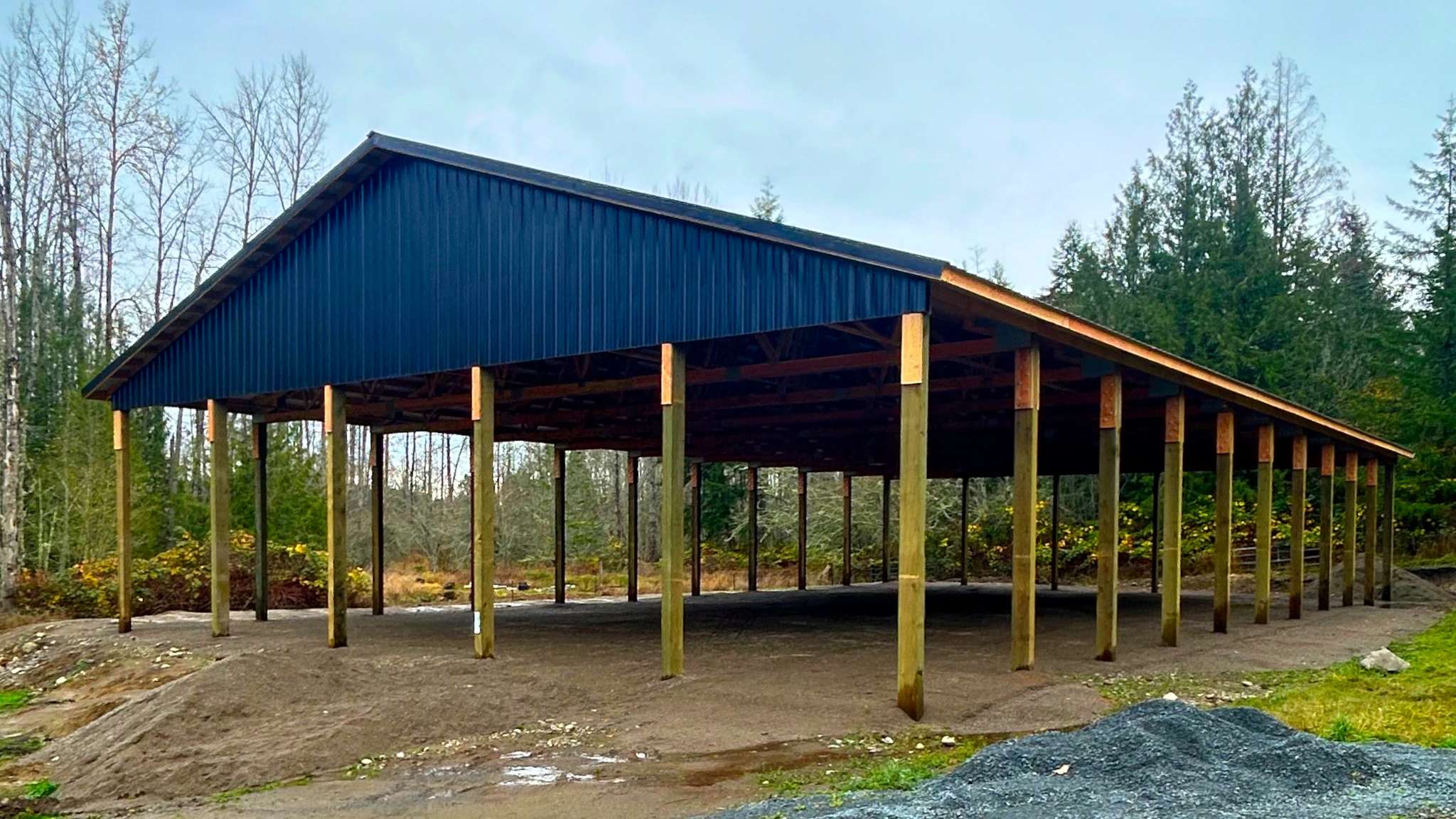
Equestrian buildings have to work for both horses and people. That means the layout needs to support safe circulation, daily routines, airflow, storage, and protection from weather without creating a building that feels cramped or awkward to use. Pole barns are often the preferred structural approach for horse facilities because post-frame construction can create broad, practical interiors that support barns, arenas, and connected support spaces.
That advantage becomes especially clear in riding arenas and larger barn layouts, where clear-span space can improve movement and reduce obstacles. It also matters in smaller private horse barns, where the value of the building often comes from how well it supports everyday care - stall access, tack storage, feed handling, wash areas, and the relationship between the building and turnout or paddock areas.
Common Equestrian Applications
Pole barn equestrian buildings are commonly used for:
- Private horse barns
- Boarding facilities
- Indoor riding arenas
- Run-in sheds and shelter structures
- Tack and feed support areas
- Multi-building equestrian layouts with connected utility spaces
What Matters Most in Horse Facility Planning
Safe Circulation
The way horses move through the building matters as much as the footprint. Aisle width, stall layout, access points, and support space placement should all reflect daily handling and care routines.
Ventilation and Moisture Control
Western Washington's climate puts extra pressure on airflow and moisture management. Equestrian facilities need ventilation strategies that support horse health and day-to-day comfort.
Arena and Barn Function
Different equestrian uses have different priorities. A private horse barn may emphasize daily care efficiency. A riding arena may prioritize open span and riding clearance. A boarding operation may need a more integrated approach.
Site Conditions
Mud control, drainage, runoff, and building orientation all have an outsized effect on equestrian usability. A well-placed building can make the property more manageable year-round.
Why Post-Frame Construction Works for Equestrian Projects
Pole barns are often a strong fit for horse facilities because they support open space, flexible layouts, and practical utility. They also work well when the project may need to grow over time or connect barn, arena, and support uses in a cohesive way.
ProBuilt's Role
The most useful equestrian projects begin with understanding the horses, the routines, and the property. The structure should be planned around real use, not around a generic list of features.
Equestrian Facility FAQs
Frequently Asked Questions About Equestrian Pole Barns
What size should a horse barn or indoor arena be?
Are pole barns good for riding arenas?
How should ventilation be planned for horses in Western Washington?
What floor systems are commonly used in stalls, aisles, and arenas?
Can barns and arenas be planned together as one facility?
Share your property details, vehicle type, and planned use